
Getting started
Keeping cattle alive
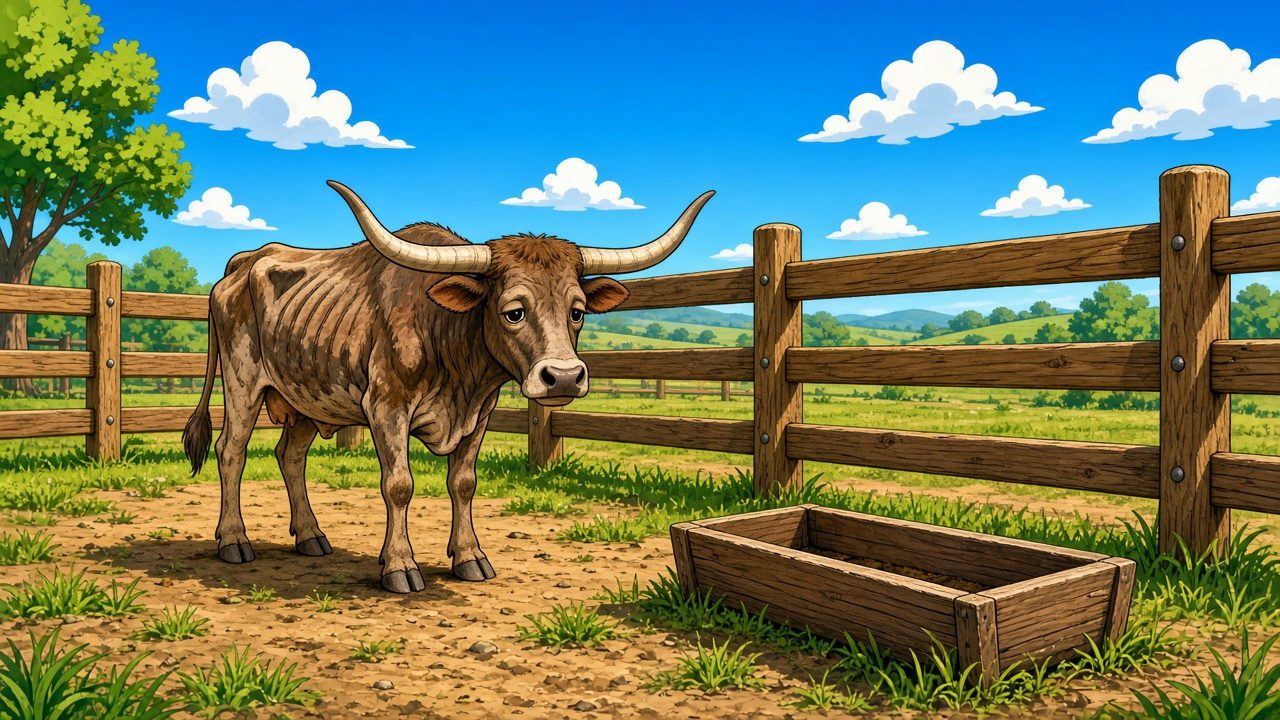
Every animal has a Health Index, from 0 to 100. Leave them unfed and that number falls. Feed them hay and it comes back up.
Hay
Buy Hay Tokens in the Mercantile. The shop charges 8 TOUGH for one token, and more if the price has been raised. One feeding pushes the health clock forward. Decay waits one hour after a feeding before it starts again. A calf that has just become an adult has a full day before starvation decay begins.
Health does not fall at the same speed for every animal. A Range cow and a Longhorn cow of the same rarity and purebred mark fall at the same rate.
- A bull falls faster. A steer falls a little slower.
- A Longhorn bull or steer falls a little slower than the same Range animal.
- Rare cattle fall slower than common cattle, and Legendary cattle fall slower still.
- A purebred falls slower than the same animal without that mark.
These stack. A purebred Longhorn steer holds condition longer than a common Range bull.
Degrade
Degrade points stay on the animal. They are added when it is left unfed, or when damage pulls its health down. The point lands as health falls under 50. In a corral or a feedlot, each further fall while health stays under 50 adds another point. On grass, a drop under 50 adds a point, then at most one more each day the damage continues. An empty water bar adds a point on its own, then another for each full day it stays empty. A calf still with its mother takes the points she takes.
Those points cut the value of the cattle. They lower the weight at weaning, they lower the weight the animal can reach as an adult, and they cut the commodity check. The Purebred Sale opens from that same check, so the points follow the animal into that sale. Read Cattle growth and the Commodity market.
When health fails
If health reaches the floor, the animal is injured. An injury caps health at 49 until you pay the vet. A starvation bill is a small TOUGH charge, between 5 and 20. A fight injury costs more, between 135 and 165. Grass does not heal an animal that still needs a vet, and it does not raise health above an injury cap.
On a tract with grass left in the season, healthy cattle gain health from grazing. If the grass tank is empty and the cattle are still on it, health is cut hard and the land itself is damaged. Read AUMs before you turn a herd out.
Water
Cattle in a corral or a feedlot live on hay. Cattle on a dry tract also have a water bar. At zero water the animal takes a degrade point, then another for each full day it stays empty. Read Water on land.